The Camino de Santiago in Germany offers a way to explore forests, historic towns, vineyards, and quiet countryside on foot. You do not need to travel to Spain to experience a pilgrimage. Germany has a network of routes that connect with the wider European Camino network.
For beginners, walking in Germany can be a practical way to start. You can choose a shorter route, plan manageable daily distances, and arrange accommodation before leaving. The right route depends on your fitness, available time, and interests.
This guide covers the main things to know before starting, including Camino de Santiago routes in Germany, planning tips, essential equipment, and three routes worth considering for a first pilgrimage.
Camino de Santiago for Beginners: Pilgrimage vs. Hiking
Hiking and pilgrimage both involve walking, but their main purposes can differ. Hiking usually focuses on the route, the landscape, and reaching a destination. A pilgrimage can include these things, but it may also involve personal reflection, religious beliefs, or time away from daily routines.
The Camino de Santiago is associated with Santiago de Compostela in Spain, where the shrine of Saint James is located. However, you can walk a section of the wider pilgrimage network in Germany without completing the entire journey to Spain.
You can also choose whether to walk alone or with others. Walking alone gives you more freedom to set your own pace and take breaks when needed. Walking with a friend or family member can make the experience more social.
Along the way, you may meet other pilgrims and learn about their reasons for walking. You do not need to follow a particular religious tradition to appreciate the history, scenery, and cultural sites along these routes.
For beginners, the main point is to choose a journey that suits your needs. You do not have to cover long distances or finish a complete route to enjoy the experience.
Camino de Santiago in Germany: General Information
The Camino de Santiago in Germany is not one single trail. It is a network of pilgrimage routes in Germany that connects with routes across Europe. These paths pass through different landscapes and regions, from northern Germany to areas near the Rhine.
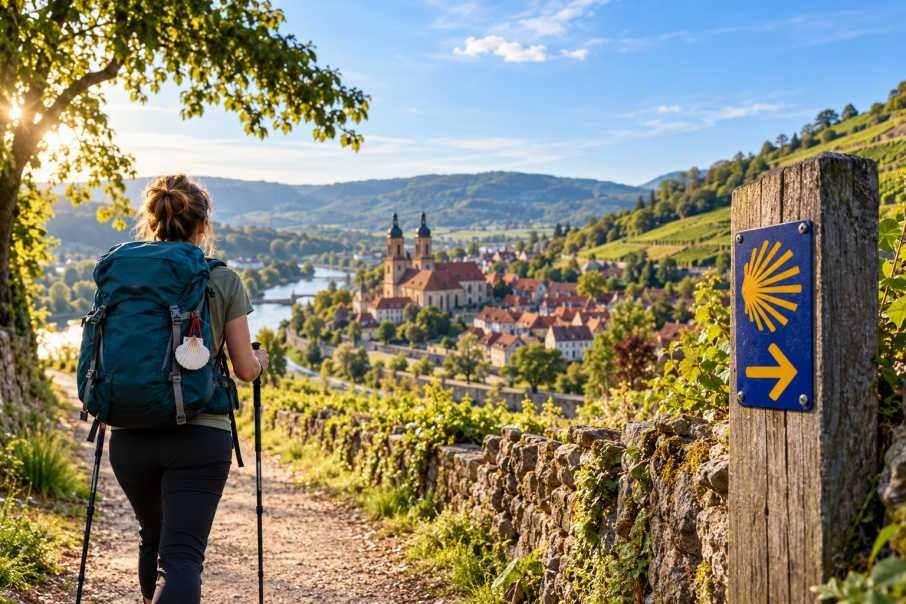
Route maps and navigation apps can help you plan your journey. You should also look for the traditional Camino marker: a yellow scallop shell on a blue background. This symbol helps pilgrims recognize the route, although you should not rely on signs alone.
A pilgrim passport is another useful item. Known in many places as a credential, it lets you collect stamps at participating churches, hostels, and other official locations along the way. The stamps provide a record of your journey.
You can check whether a pilgrim passport is available through a local pilgrimage organization or an official Camino resource before departure. Requirements and arrangements may vary by route.
The network gives beginners several options. You can walk a short section over a weekend or plan a longer journey with multiple overnight stops. Before choosing, check the route length, surface conditions, accommodation, and transport connections.
Read More: Best Things to Do in Hamburg, Germany
Planning the Camino de Santiago in Germany
Good planning can make your first pilgrimage easier. Start by choosing a route that matches your available time and walking ability. Do not select a long route simply because it is popular.
Choose a realistic daily distance
For many beginners, 15 to 20 kilometers per day can serve as an initial planning estimate. However, this distance may be too demanding for some walkers, especially when carrying a backpack or walking on uneven ground.
Test your fitness with a longer walk before the trip. Pay attention to how your feet, legs, and back feel during the walk and afterward. Use this experience to set a suitable daily distance.
Plan enough time for breaks, meals, and visits to local attractions. A pilgrimage should not become a race to cover as many kilometers as possible.
Choose the best time to walk
The best time for a Camino pilgrimage in Germany depends on the region and the conditions along your chosen route. May and June can offer pleasant spring weather, while September and October are often suitable for autumn walks.
Weather can still change quickly. Check local forecasts before departure and review any seasonal restrictions or accommodation changes. Booking overnight stays in advance can also help you avoid problems during busy travel periods.
Plan your luggage and accommodation
Keep your luggage as light as possible. A heavy backpack can make long walking days more difficult, so take only what you need.
If carrying everything is uncomfortable, look into luggage transport for pilgrims. Some providers move bags between overnight stops, but availability and coverage depend on the route.
For accommodation, consider pilgrim hostels in Germany, guesthouses, and hotels. Your choice will depend on your budget, preferred level of comfort, and the facilities available along the route. Check opening dates, booking rules, and distances between overnight stops before setting out.
Preparing for the Camino: Essential Tips for Beginners
The right Camino de Santiago packing list can make your first pilgrimage more comfortable. Start with well-fitted walking shoes that you have already worn on several long walks. Shoes with good grip can help you walk safely on different surfaces.
Carry blister plasters and basic first-aid supplies. A small problem with your feet can make several days of walking difficult.
If you plan to carry your own luggage, choose a lightweight backpack with a capacity of around 20 to 30 liters. Pack only essential clothing, toiletries, water, snacks, and any personal items you need.
A waterproof rain jacket or poncho is also important. Weather conditions can change during the day, even in warmer months. Wear comfortable clothing that allows you to move freely and dries quickly.
You may also consider walking poles. They can provide extra support on uneven ground and help reduce the strain on your knees. Try them before your trip to see whether they suit your walking style.
Read More: Best Things to Do in Leipzig, Germany
Best Camino de Santiago Routes in Germany
There are many Camino de Santiago routes in Germany, each offering different landscapes and cultural attractions. For beginners, the most suitable route depends on the distance, available time, and level of difficulty.
Here are three routes to consider for your first pilgrimage.
1. Franconian Way of St. James (350 km)
The Franconian Way of St. James is a route for walkers who want to combine pilgrimage with history and cultural visits. The route described in the source begins in Nuremberg and covers approximately 350 kilometers.
Along the way, you can explore historic towns, traditional architecture, and scenic parts of Franconia. Places mentioned along the route include Rothenburg ob der Tauber, Eichstätt, and Würzburg.
Highlights include vineyards, monasteries, and traditional breweries. These stops give you opportunities to learn about the region while taking breaks from walking.
The route is divided into approximately 14 stages in the competitor’s description. However, its full distance makes it a more demanding choice for anyone planning to complete the entire trail. Beginners can consider walking a shorter section first.
Best for: Travelers interested in historic towns, architecture, regional culture, and longer walking trips.
2. Baden Way of St. James (300 km)
The Baden Way of St. James passes through parts of southwestern Germany, including areas around the Rhine Valley and the Black Forest region.
The route described by the competitor starts in Mülheim and continues through the Offenburg area toward Oberkirch. Along the way, walkers can see vineyards, orchards, historic buildings, and countryside landscapes.
The route covers approximately 300 kilometers and is described as having around 12 stages. Its regional attractions include local food, fruit-growing areas, and the cultural character of Baden.
Some sections may be easier to walk than others. Check the elevation, surface conditions, and daily distances before deciding whether the route suits your fitness level.
Best for: Walkers who enjoy vineyards, countryside scenery, local food, and cultural stops.
3. Southern Palatinate Way of St. James (140 km)
The Southern Palatinate Way of St. James is the shortest of these three routes, with a stated distance of approximately 140 kilometers.
According to the competitor’s description, the route begins near Speyer Cathedral and continues through the Palatinate Forest toward Hornbach Monastery. The surrounding landscape includes forests, vineyards, historic ruins, and small villages.
The route is described as having six stages. Its shorter total distance may make it a practical option for travelers with limited time, although six walking days can still require preparation.
Beginners should check the daily distances and terrain before booking accommodation. You can also walk only part of the route if you want to start with a shorter pilgrimage.
Best for: Beginners who want a shorter route, weekend pilgrims planning selected sections, and walkers who enjoy forests and historic sites.
Read More: Best Weekend Trips in Southern Germany
Alternatives to Pilgrimage in Germany
If a pilgrimage does not suit your plans, you can still enjoy hiking trails in Germany. Ordinary hiking routes offer opportunities to explore forests, mountains, villages, and countryside without following a pilgrimage tradition.
Choose a trail based on your fitness, available time, and preferred landscape. Short day hikes can also help you prepare for a longer Camino journey later.
Final Thoughts
The Camino de Santiago in Germany offers several ways to experience pilgrimage without starting with a long journey to Spain. You can choose a shorter section, prepare with regular walks, and plan your accommodation and luggage in advance.
Compare the routes carefully before making a decision. Check current maps, trail conditions, transport options, and overnight stops through reliable local or official sources. With realistic daily distances and suitable equipment, you can plan a first pilgrimage that fits your needs.
Frequently Asked Questions
Where does the Camino de Santiago run in Germany?
The Camino de Santiago in Germany consists of multiple routes rather than one continuous trail. These paths pass through different regions and connect with the wider European pilgrimage network. Check an official route map to find the sections that suit your plans.
Which German Camino route is best for beginners?
The Southern Palatinate Way of St. James may be a useful starting point because its stated total distance is shorter than the other two routes discussed here. The Baden Way is another option to consider. Your fitness, daily walking distance, and available time should guide your choice.
Which regions are worth visiting along the Camino?
Franconia offers historic towns and cultural attractions. Baden has vineyards, orchards, and countryside scenery. The Palatinate region features forests, vineyards, and historic ruins. Each region provides a different experience, so choose the one that best matches your interests.