
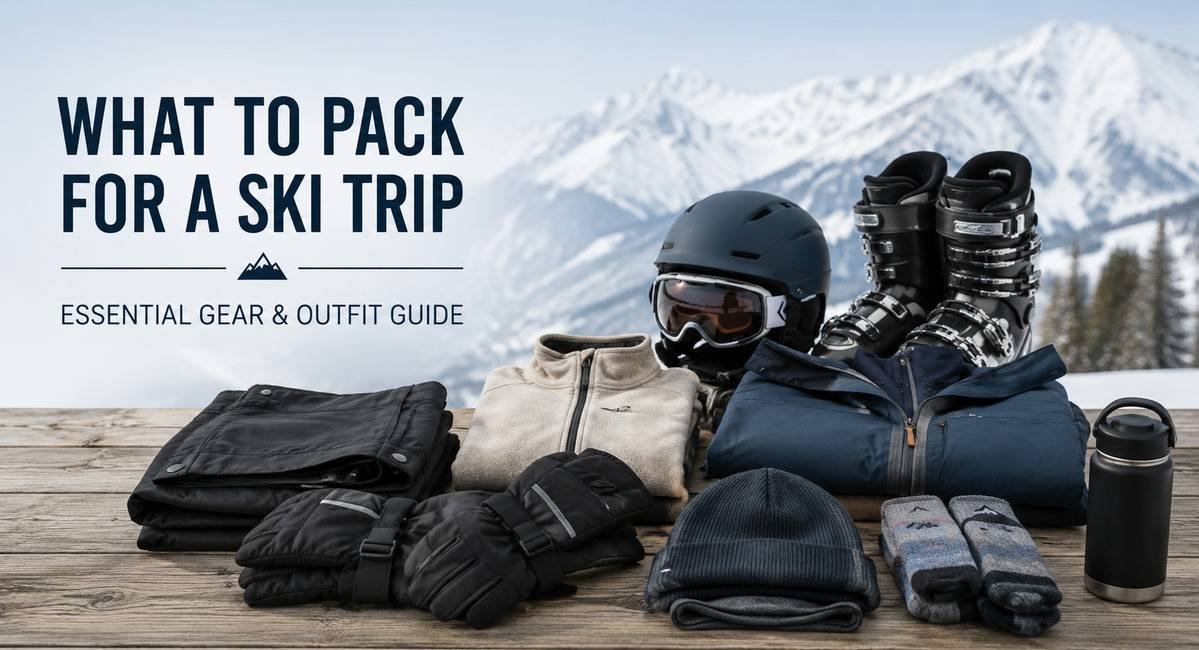
Planning a ski trip requires more than packing a warm jacket. You need the right ski gear, clothing layers and accessories to stay warm and comfortable on the slopes. A practical ski trip packing list also helps you avoid carrying items you do not need.
This guide covers what to pack for a ski trip, what to wear while skiing and what to bring for time away from the slopes.
Ski Trip Packing List at a Glance
Before packing, divide your items into four main groups: ski gear, ski clothing, off-slope clothes and personal essentials.
Ski Gear
- Ski helmet
- Ski goggles
- Ski gloves or mittens
- Ski boots
- Skis and poles, if bringing your own
Ski Clothing
Off-Slope Clothing
- Winter boots
- Sweaters or fleece
- Casual pants
- Sleepwear
- Underwear
Personal Essentials
- Sunscreen
- SPF lip balm
- Sunglasses
- Toiletries
- Phone and charger
- Water bottle
- Travel documents
Essential Ski Gear to Pack
The right equipment can make skiing safer and more comfortable. If you already own your gear, check that everything fits and works properly before your trip.
Skis, Poles and Ski Boots
If you have your own equipment, pack your skis, poles and ski boots in suitable protective bags. Check your bindings and boots before traveling.
If you are a beginner, renting can be easier. Most ski resorts offer equipment rentals, including skis, poles and boots. Renting also saves luggage space when you are flying.
Ski Helmet
A properly fitted helmet is one of the most important pieces of ski gear essentials. It should fit securely without being uncomfortable.
Do not rely on a loose winter hat underneath the helmet. If you need extra warmth, use a thin layer designed to fit under a helmet.
Ski Goggles
Ski goggles protect your eyes from wind, snow and bright sunlight. They also improve visibility in changing weather.
Choose goggles that fit comfortably with your helmet. If possible, consider lens options suited to the conditions you expect at the resort.
Ski Gloves or Mittens
Cold hands can quickly make a ski day uncomfortable. Choose insulated gloves or mittens that are waterproof or highly water-resistant.
Mittens generally provide more warmth because your fingers stay together. Gloves offer better dexterity for adjusting equipment and handling small items.
Neck Gaiter or Balaclava
A neck gaiter protects your neck and face from cold wind. A balaclava can provide more coverage during very cold conditions.
Choose a lightweight, breathable material that can be worn comfortably under your helmet and jacket.
What to Wear Skiing: The Essential Layers
Knowing what to wear skiing is mainly about using the right layers. Each layer has a different purpose. Your base layer manages moisture, the middle layer provides insulation and the outer layer protects you from snow and wind.
Base Layer
Start with a moisture-wicking thermal top and bottom. Merino wool and synthetic fabrics are common choices for skiing.
Avoid cotton as a base layer. It absorbs moisture and can stay wet against your skin, making you feel colder.
Mid Layer
The mid layer provides additional warmth. A fleece, lightweight insulated jacket or similar layer can work well.
The thickness you need depends on the weather and how active you are. For milder days, a lighter mid layer may be enough. In colder conditions, choose a warmer option.
Outer Layer
Your outer layer protects you from snow, wind and moisture. A waterproof or highly water-resistant ski jacket is essential.
Pair it with waterproof ski pants or a ski bib. Look for clothing that allows movement while skiing and has enough room for your base and mid layers.
Ski Socks
Wear dedicated ski socks made from wool or synthetic materials. They should be warm but not excessively thick.
Very thick socks can make ski boots feel tight and restrict circulation. Pack enough pairs to have a clean, dry pair for each day you plan to ski.
Outfit for a Day on the Slopes
A basic ski outfit can include:
- Thermal base layer
- Fleece or insulated mid layer
- Waterproof ski jacket
- Ski pants or bib
- Ski socks
- Waterproof gloves or mittens
- Ski goggles
- Helmet
- Neck gaiter
Après-Ski Outfit
After skiing, change into dry and comfortable clothes. A warm sweater or fleece works well with jeans, trousers or leggings.
Wear warm winter boots instead of ski boots. Add a beanie or casual jacket if you plan to spend time outdoors.
Casual Evening Outfit
For dinner or other evening activities, pack simple warm clothing. A sweater, casual trousers and a warm jacket are usually enough.
If the resort is snowy, choose footwear with good traction. Regular sneakers may not provide enough grip or weather protection.
Off-Slope Clothes to Pack for a Ski Trip
Ski clothing is only part of what to bring on a ski trip. You will also need comfortable clothes for travel, dining and time around the resort.
Pack a few versatile items instead of a separate outfit for every activity. Useful options include:
- Sweaters or fleece tops
- T-shirts
- Jeans or casual trousers
- Thermal leggings
- Underwear
- Sleepwear
- Warm winter boots
- Beanie
- Casual gloves
- Warm jacket
Ski Trip Accessories and Personal Essentials
The small items in your bag can be just as useful as your main ski gear. They help with sun exposure, cold weather and everyday needs around the resort.
Sun and Skin Protection
Pack a high-SPF sunscreen and apply it to exposed skin before heading outside. Snow can reflect strong sunlight, even on cloudy days.
An SPF lip balm is also useful in cold and dry conditions. Add a moisturizer if your skin tends to become dry during winter.
Sunglasses are useful when you are not wearing your ski goggles. They are especially helpful when walking around the resort during the day.
Useful Ski Accessories
A few small items can make your ski days easier:
- Hand warmers
- Reusable water bottle
- Small backpack
- Portable charger
- Tissues
- Hand sanitizer
- Snacks
- Small first-aid items
Toiletries
Pack your usual toiletries in travel-size containers where possible. Include a toothbrush, toothpaste, deodorant, face wash, moisturizer and any personal medication.
You do not need to pack full-size bottles for a short trip. Check whether your accommodation provides basic toiletries before adding them to your bag.
What to Pack for a Ski Trip by Trip Length
The amount you need depends on the length of your trip. You can reuse some outer layers and mid-layers instead of packing a complete ski outfit for every day.
2–3 Day Ski Trip
For a short trip, pack:
- 2 base-layer sets
- 2–3 pairs of ski socks
- 1–2 mid-layers
- 1 ski jacket
- 1 pair of ski pants
- 1–2 pairs of gloves or mittens
- 2 casual outfits
- 1 pair of winter boots
- Basic toiletries
4–5 Day Ski Trip
For a longer weekend or short vacation, add another base layer and a few more casual clothes.
- 2–3 base-layer sets
- 3–4 pairs of ski socks
- 2 mid-layers
- 1 ski jacket
- 1–2 pairs of ski pants
- 2 pairs of gloves or mittens
- 2–3 casual outfits
- Winter boots
- Toiletries and personal essentials
7-Day Ski Trip
A week-long trip does not require seven complete ski outfits. Two or three base-layer sets can usually be rotated and washed if needed.
Pack around 4–5 pairs of ski socks, 2–3 mid-layers, one ski jacket and one or two pairs of ski pants. Add enough casual clothes for evenings and rest days.
Your packing list for ski trip should also account for the local weather. A colder destination may require extra insulation, while milder conditions may allow you to pack lighter.
Final Thoughts
A good ski trip packing list should focus on warmth, comfort and the activities you plan to do. Pack your ski layers, waterproof outerwear, essential gear and a few practical items for time away from the slopes.
If you are renting equipment, you can reduce the amount of bulky gear you need to carry. Check the weather forecast and resort conditions before leaving, then adjust your ski trip packing list accordingly.
Frequently Asked Questions
Wear a moisture-wicking base layer, an insulating mid-layer and a waterproof outer layer. Add ski socks, waterproof gloves, goggles and a properly fitted helmet.
Three layers work well for most conditions: a moisture-wicking base layer, an insulating mid-layer and a waterproof outer layer. You can add or remove the mid-layer depending on the temperature.
Rent skis, poles and ski boots if you are a beginner or only ski occasionally. Bring personal items such as base layers, socks, gloves, goggles and ski clothing.
No. Jeans are not suitable for skiing because they absorb moisture and provide little insulation when wet. Wear waterproof ski pants over your base layers instead.
They are not essential for everyone, but hand and toe warmers can be useful on particularly cold days or for people who struggle with cold hands and feet.