
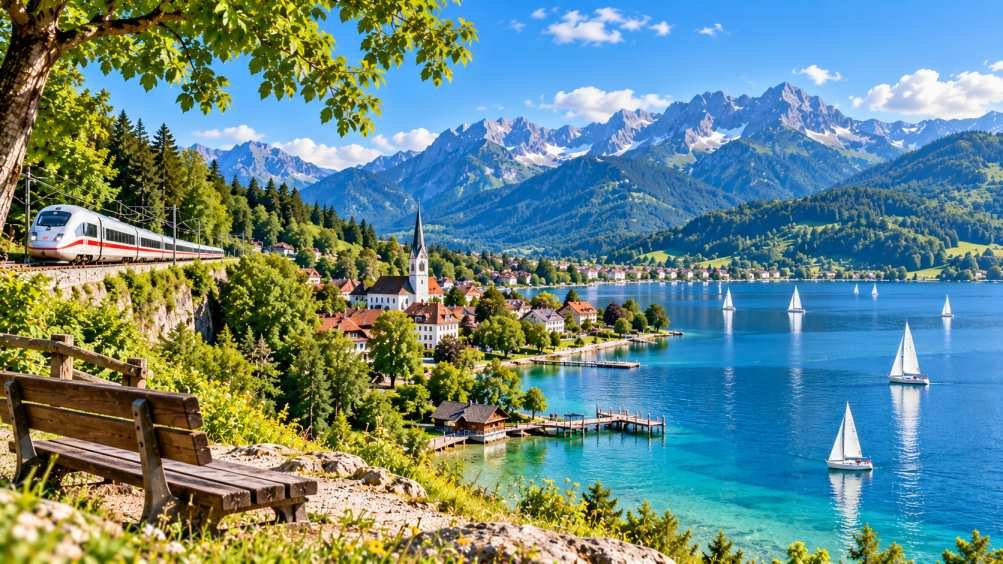
Planning a holiday that has less impact on the environment? Germany offers many options for sustainable travel, from mountain villages and coastal regions to nature reserves and cities. You can explore these places by train, bicycle, or public transport while enjoying local food, outdoor activities, and cultural attractions.
Choosing eco-friendly holidays in Germany does not mean giving up comfort or interesting experiences. It means making thoughtful choices about transport, accommodation, food, and activities.
Here are five sustainable travel destinations in Germany to consider for your next trip.
5 Tips for Eco-Friendly Travel Destinations in Germany
1. Allgäu, Bavaria
The Allgäu region in Bavaria is a good choice for travellers who enjoy mountains, lakes, and outdoor activities. Its main attractions include Neuschwanstein Castle near Füssen and Breitachklamm near Oberstdorf, a deep rocky gorge.
The region is known for its green meadows, mountain peaks, clear lakes, and traditional villages. Local food is also an important part of its culture. Allgäu cheese spaetzle, known as Allgäuer Kässpatzen, is a popular regional dish.
The area promotes local products and greater awareness of nature. Its Food Heritage project supports traditional regional food and connects it with local farming and culture.
Oberstdorf has also invested in climate measures and transport options. Visitors can explore more than 200 kilometres of walking routes and cycling paths. Guest cards may also provide free access to local public transport, depending on the services and conditions.
In 2023, Oberstdorf won first place in the starter category of Germany’s national competition for sustainable tourism destinations.
For travellers seeking eco-friendly holidays in Germany, the Allgäu offers mountain scenery, regional food, and opportunities to explore without relying on a car for every journey.
2. Vorpommern, Mecklenburg-Vorpommern
Vorpommern is a coastal region in northeastern Germany. It is suitable for travellers who want a beach holiday combined with nature and outdoor activities.
The region includes parts of the Baltic Sea coast, the Darß peninsula, and the islands of Usedom and Rügen. Visitors can explore sandy beaches, chalk cliffs, forests, and wetlands. These natural areas support a wide range of wildlife.
Nature lovers can join guided walks in local nature parks or explore the region by bicycle. With some luck, they may spot white-tailed eagles, beavers, and migrating cranes. The cycling route around the Szczecin Lagoon is another option for visitors who want to explore the area at a slower pace.
Nature protection is an important part of the region. Many areas belong to Germany’s national natural landscapes, and the region contains protected sites of international importance.
Several towns, including Rostock, Schwerin, and Greifswald, also participate in the Fairtrade Towns campaign. These towns support fair trade and more responsible consumption. Rostock provides a shopping guide that helps residents and visitors find businesses offering environmentally friendly products.
Vorpommern is a strong option for sustainable travel in Germany, especially for visitors interested in beaches, cycling, wildlife, and protected natural areas.
Read More: Best Harz Mountains Attractions in Germany
3. Saxon Switzerland
Saxon Switzerland is a popular destination for hiking and nature trips in eastern Germany. The region is famous for its sandstone rock formations, forest paths, and views of the Elbe River.
The area offers a practical way to explore without a car. The Gästekarte mobil allows eligible visitors to use selected public transport services, including buses, S-Bahn trains, regional trains, and ferries, without an additional fare under the card’s conditions.
Many hiking routes begin near public transport stops. Visitors can explore the landscape with certified national park guides or hike to Rauenstein for views of the surrounding countryside.
Schmilka is another place worth visiting. This small village on the Elbe follows an organic approach to food and daily life. It has traditional half-timbered buildings, local workshops, and a historic mill. Visitors can also try products from its organic bakery.
The village focuses on organic food and uses renewable energy. It offers a different experience from a typical sightseeing trip.
For people looking for nature holidays in Germany, Saxon Switzerland combines hiking, regional food, public transport, and a village with a strong focus on organic living.
4. Bliesgau Biosphere Reserve, Saarland
The Bliesgau Biosphere Reserve is located in southeastern Saarland. Its landscape includes forests, orchards, river meadows, and open countryside. It is a good choice for travellers who enjoy cycling, walking, and exploring nature.
The region promotes sustainable tourism in Germany by connecting local producers, tourism businesses, and transport services. Visitors can find information about walking routes that use buses and trains.
The 135-kilometre Glan-Blies cycling route is a popular option for cycling enthusiasts. It starts in Lorraine, France, and passes through the Bliesgau region before continuing into Rhineland-Palatinate. Much of the route follows former railway lines.
Visitors can also use the Biosphärenbus 501, which runs hourly through the reserve. It makes it easier to explore different places without driving between stops.
Bliesgau is suitable for travellers who want to enjoy peaceful landscapes, local communities, and outdoor activities while making more responsible travel choices.
Read More: Baltic Sea Holiday Homes in Germany with Beautiful Sea Views
5. Bremerhaven
Bremerhaven is a good choice for a sustainable city break in Germany. Located on the North Sea coast, the city offers museums, maritime attractions, and educational experiences. It can also be reached by train.
One of its main attractions is the Klimahaus. This museum takes visitors through different climate zones and explains how climate conditions vary around the world. Its exhibitions also cover climate change and ways to reduce its effects.
The German Emigration Center is another place to visit. It explores the history of emigration and the experiences of people who moved from Germany to other countries.
Bremerhaven also has a historic harbour and several cultural attractions. Visitors can explore many places on foot and use public transport for longer journeys.
For travellers who prefer museums and city attractions to hiking or beach activities, Bremerhaven offers an interesting option for eco-friendly travel in Germany.
6 Sustainable Hotels in Germany
Choosing accommodation is another important part of planning a more sustainable holiday. The following hotels offer convenient bases for exploring different regions of Germany. Check their current environmental certifications and sustainability policies before booking.
1. Hotel Filser, Oberstdorf
Hotel Filser is a four-star hotel in Oberstdorf, Bavaria. It offers comfortable accommodation in the Allgäu region. Its location makes it a useful base for mountain walks, cycling, and exploring nearby attractions.
2. Hotel Lanig Resort & Spa, Oberjoch
Hotel Lanig Resort & Spa is located in Oberjoch, surrounded by the Bavarian Alps. It combines comfortable rooms with spa and wellness facilities. It is suitable for travellers looking for a relaxing stay with access to outdoor activities.
3. SEETELHOTEL Kaiserstrand Beachhotel, Usedom
This hotel is located on the island of Usedom along the Baltic Sea coast. It offers sea views and access to the beach. It is a suitable option for travellers planning a coastal holiday.
4. Hotel Elbresidenz an der Therme, Bad Schandau
Hotel Elbresidenz an der Therme is a five-star hotel in Bad Schandau. It offers views of the Elbe River and access to thermal spa facilities. Its location is convenient for visitors exploring Saxon Switzerland National Park.
5. Center Parcs Park Bostalsee, Saarland
Center Parcs Park Bostalsee offers family accommodation and outdoor activities near Lake Bostalsee. The park has received Green & Fair certification. Visitors can enjoy the surrounding landscape and a range of leisure activities.
6. THE LIBERTY, Bremerhaven
THE LIBERTY is a modern hotel near Bremerhaven’s historic harbour. Its location provides convenient access to the city’s museums and maritime attractions. It is worth considering for travellers planning a city break.
Read More: 5 Most Beautiful Mountain Lakes in Germany to Visit
How to Make Your Trip to Germany More Sustainable
You can make your holiday more environmentally responsible with a few practical choices.
- Travel by train: Choose rail travel when it is a practical alternative to driving or flying. Deutsche Bahn states that its electric ICE, IC, and EC trains run on 100% renewable electricity.
- Use public transport: Check whether your destination offers guest cards that include local buses or trains.
- Walk or cycle: Choose walking routes and cycling paths to explore the area without a car.
- Eat local food: Support local restaurants and producers by choosing regional and seasonal products.
- Choose accommodation carefully: Look for recognised environmental certifications and clear information about energy use, waste reduction, and food sourcing.
- Stay longer in one region: Spending more time in one place can reduce the need for repeated journeys between destinations.
These simple steps can help you enjoy sustainable holidays in Germany while supporting local businesses and reducing unnecessary travel.