
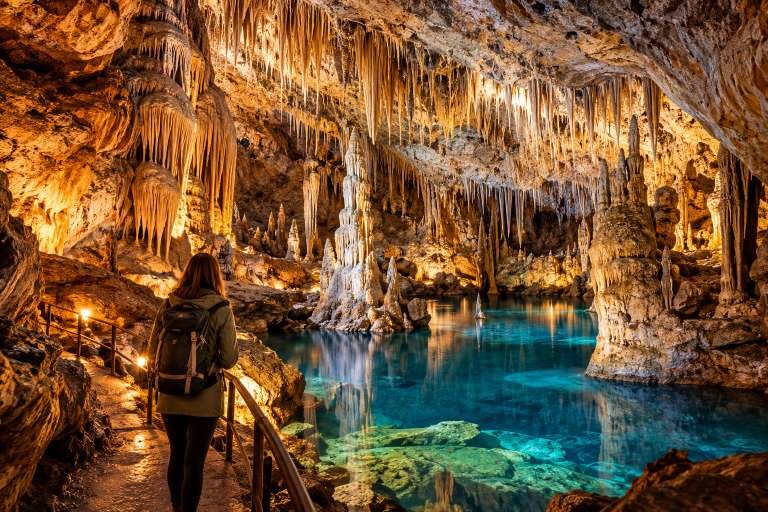
The Harz Mountains in Germany are home to many caves with unusual rock formations, underground chambers, and fascinating histories. Some caves are open for guided tours, while others are natural sites that visitors can explore from outside.
If you are looking for caves in the Harz Mountains, there are several places worth adding to your travel plans. From the famous Einhorn Cave to the large chambers of Barbarossa Cave, each location offers something different.
Here are ten caves and cave attractions to consider when visiting the Harz region.
Caves in the Harz Mountains
Caves form naturally through different geological processes. Some contain stalactites and stalagmites, while others have large chambers, narrow passages, or unusual rock shapes.
The Harz region has several show caves in Germany where visitors can learn about geology and local history. Some sites also contain evidence of prehistoric life or offer a look at how people once lived.
Not every cave is open to the public. Check visitor information before planning your trip, especially if you want to enter a cave.
Top 1: Einhorn Cave
Einhorn Cave, or Unicorn Cave, is located near Scharzfeld in the Harz Mountains. It is an ancient karst cave with a natural appearance and a history linked to prehistoric discoveries.
The cave gets its name from old stories about unicorn bones found inside. These remains were later identified as bones from Ice Age animals. Parts of Neanderthal skeletons have also been discovered here.
Visitors can explore around 300 metres of the cave. Its main areas include the Schiller Hall, the Leibniz Hall, and the narrow Jacobs Passage. The Schiller Hall is about eight metres high and 35 metres long.
The cave offers an interesting visit for people interested in geology and early human history. You can also visit the information centre at Haus Einhorn, next to the cave, to learn more about the site.
Top 2: Great Sandstone Cave
The Great Sandstone Cave in Blankenburg is a natural attraction near Regenstein Castle. Surrounded by pine forests, the site offers an outdoor experience for families, hikers, and nature lovers.
The sandstone formations cover a large area and create unusual shapes in the rock. Visitors can walk among the rocks, explore the caves, and look at markings on the stone.
Getting there is also part of the experience. The walking route passes through woodland and near the ruins of Regenstein Castle. The natural setting makes this a good stop for anyone exploring the area on foot.
You can also combine your visit with a trip to Regenstein Mill, a former watermill nearby.
If you prefer outdoor attractions to underground tours, the sandstone caves in Blankenburg are worth considering.
Top 3: Barbarossa Cave
Barbarossa Cave is located in the Kyffhäuser Nature Park. It is one of the most unusual show caves in Germany because it formed in anhydrite rock, a mineral that is less common in caves open to visitors.
The cave takes its name from Emperor Frederick Barbarossa. According to legend, he lived in an underground kingdom. One chamber is arranged to suggest how a room with a throne and table might have looked.
During a guided tour, visitors pass through large underground spaces and see clear underground lakes. Another chamber contains hanging rock formations that resemble animal hides.
The cave also shows how geological processes shape underground landscapes. Guides explain its formation and the history of the surrounding area.
One interesting detail is the slow growth of some cave formations. According to the source article, the formations grow only about five centimetres over 100 years.
Barbarossa Cave is a good choice if you want to see unusual rock structures and learn about the geology of the Harz region.
Read More: Camino de Santiago in Germany
Top 4: Ziegenschwanz Cave
Ziegenschwanz Cave is a small cave near Questenberg, surrounded by natural landscapes. Finding its hidden entrance is part of the adventure.
The cave extends about 20 metres into the rock. Its entrance has a pointed shape that resembles a goat’s tail, which explains its German name. It is also known as the Ice Hole or Goat Hole.
The passage becomes dark after the first few metres, so visitors should not enter without suitable lighting and should check whether access is permitted. Unlike larger tourist caves, this is a small natural site rather than a developed visitor attraction.
There are benches outside where you can sit and enjoy the surroundings. You can also bring food for a picnic and spend some time in the quiet countryside.
Ziegenschwanz Cave is worth considering if you enjoy smaller natural sites rather than organised cave tours.
Top 5: Iberg Stalactite Cave
The Iberg Stalactite Cave near Bad Grund is another attraction for visitors interested in stalactite caves in Germany. The cave reaches depths of up to 48 metres and is accessed through a former mine.
The visitor experience includes a museum and an underground cave tour. The museum presents research and finds connected to the Lichtenstein family, including discoveries of human bones.
Below ground, visitors can see colourful rock formations inside a cave that developed in an ancient coral reef. Guided explanations help visitors understand how the cave formed and how its features developed over time.
After the tour, you can visit the museum café and take a break before continuing your trip.
Local legends also add interest to the site. One story describes a friendly dwarf king who lived in the cave with his followers and worked in mining.
Top 6: Heimkehle Show Cave
Heimkehle Show Cave is a large gypsum cave in Uftrungen, in the southern Harz region. The surrounding karst landscape is also popular with hikers.
The cave has two entrances, including an older natural entrance. Guided visits have taken place here since 1920, and visitors can enter the show cave only with a guide.
The route passes through long tunnels and large chambers. The Kleine Dom contains a memorial to victims of Nazi persecution. The Große Dom provides further historical context, including evidence of the forced labour that took place there.
Another highlight is the Thyra Hall, which has ceilings between six and ten metres high and contains the Thyra Lake.
Visitors may also spot bats, which live in or use the cave throughout the year. Keep a respectful distance and avoid disturbing them.
Heimkehle is a suitable option for travellers who want to combine natural cave formations with an important part of regional history.
Read More: Best Beer Gardens in Germany
Top 7: Baumann’s Cave
Baumann’s Cave is located in Rübeland and was discovered in 1539. It is one of the best-known caves in the Harz Mountains, with impressive stalactites and stalagmites.
One of its main attractions is Goethe Hall, the largest chamber in the cave. It is named after the German writer Johann Wolfgang von Goethe, who visited the cave several times. The hall also hosts theatre performances and concerts.
During a visit, you can pass an artificial underground lake and explore areas such as Schildkrötenschlucht. The cave contains many different rock formations, including stalactites hanging from the ceiling and stalagmites rising from the ground.
The temperature inside the cave is around 8°C. Bring a warm jacket, even if you visit during summer.
Top 8: Hermann’s Cave
Hermann’s Cave is another well-known attraction in Rübeland. It was discovered by chance during construction work in the 19th century. The cave system extends for several kilometres, although visitors can explore only the designated tourist route.
The cave has several chambers with unusual rock formations. In the area known as Hohe Kluft, some formations resemble skulls, waterfalls, and turtles.
Hermann’s Cave is also known for its wildlife. Several bat species use the cave, and it is home to cave olms, which are small aquatic animals that live in underground waters. These animals are shy and can be difficult to spot.
A guided visit is a good way to learn about the cave’s geology and wildlife. If you want to explore both major Rübeland caves, you can combine Hermann’s Cave with a visit to Baumann’s Cave.
Top 9: Langenstein Cave Dwellings
The Langenstein Cave Dwellings are different from the other caves on this list. They are historic homes built into the rock rather than natural stalactite caves.
Located in Langenstein near Halberstadt, these dwellings offer a look at an earlier way of life. The homes have windows, curtains, and small gardens, giving them a distinctive appearance.
People lived in these cave homes until the early 20th century. The last resident left in 1916, according to the source article. The dwellings show how people adapted natural rock spaces for everyday living.
You can explore the site independently or join a guided tour, depending on the available arrangements. The buildings and their surroundings make this an interesting stop for visitors interested in local history and traditional homes.
If you want something different from underground cave tours, the Langenstein Cave Dwellings are worth adding to your Harz itinerary.
Read More: Best Dog-Friendly Holiday Destinations in Germany
Top 10: Jetten Cave
Jetten Cave is a gypsum cave in the Hainholz gypsum karst landscape near Düna. It is known for its underground passages and local legends.
According to local stories, dwarfs once lived in the cave and hid from farmers. The cave has around 600 metres of passages, making it an interesting natural feature.
However, Jetten Cave is not open to visitors. It lies within a protected natural area, so you should not attempt to enter it. You can learn about the surrounding landscape while respecting the site’s access restrictions.
If you are planning a trip to the Harz region, choose one of the public show caves for an underground visit instead.
Final Thoughts
The caves in the Harz Mountains offer a mix of natural formations, underground lakes, wildlife, and historical sites. Einhorn Cave is worth considering for its prehistoric discoveries, while Baumann’s Cave and Hermann’s Cave are known for their rock formations. The Langenstein Cave Dwellings offer a different experience through their history and architecture.
Before visiting, check opening times, tour requirements, and access restrictions. Wear warm clothing and sturdy, non-slip shoes for underground visits. With a little planning, you can choose the caves that best match your interests.
Frequently Asked Questions
What should you wear inside a stalactite cave?
Wear warm clothing and sturdy shoes with non-slip soles. Cave floors can be wet and uneven, and temperatures are often much lower than outside. A jacket is useful even in summer.
How cold is it inside a stalactite cave?
Many caves remain cool throughout the year. The source article gives a temperature of around 8°C for these caves. Conditions can vary between locations, so check the details for the cave you plan to visit.
Why do stalactites form in caves?
Stalactites form when mineral-rich water drips from a cave ceiling. As the water loses carbon dioxide and leaves behind calcium carbonate, small mineral deposits build up over time. These deposits gradually form hanging structures called stalactites. Similar deposits on the floor can grow upwards to form stalagmites.
Which caves in the Harz Mountains can you visit?
The article covers several visitor attractions, including Einhorn Cave, Barbarossa Cave, Baumann’s Cave, Hermann’s Cave, and Heimkehle Show Cave. Some require guided tours. Jetten Cave is not open to visitors, so always check access rules before planning your trip.