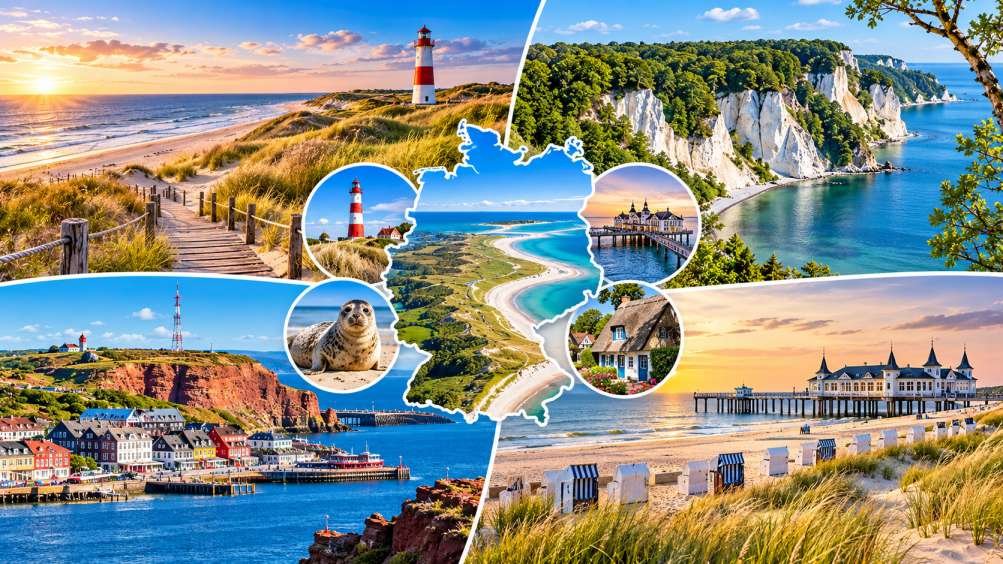
Germany’s North Sea and Baltic Sea islands offer sandy beaches, coastal towns, and natural landscapes. Each island has its own features, from long beaches and sand dunes to quiet villages and wildlife. TUI staff member Nina introduces 10 of the best German islands and explains what you can see and do on each one.
You do not need to travel far to enjoy a beach holiday. You can walk along sandy beaches, listen to the waves, feel the sea breeze, and enjoy views of the horizon on Germany’s islands.
There are more than 100 islands along Germany’s coast. Some of the best-known islands in the North Sea and Baltic Sea are Sylt, Föhr, Amrum, Rügen, and Usedom. They attract visitors with sandy beaches, dunes, cliffs, forests, and coastal towns.
These islands are also home to many coastal animals, including seals and porpoises. The harbour porpoise is one of the smallest whale species in the world and lives in both the North Sea and Baltic Sea, often close to the coast. If you are lucky, you may see one during your visit.
The North Frisian and East Frisian islands are popular places for people who want a break from busy daily life. Each island offers different landscapes, activities, and places to explore.
The Best German Islands at a Glance
| Island | Sea | Best for | Main attractions | Best time to visit |
|---|---|---|---|---|
| Sylt | North Sea | Couples, food lovers, and surfers | Dunes, restaurants, and Wadden Sea | May to September |
| Rügen | Baltic Sea | Families and active travellers | Chalk cliffs and seaside resorts | May to October |
| Langeoog | North Sea | Nature lovers and people seeking peace | Car-free island, national park, and beaches | June to September |
| Heligoland | North Sea | Wildlife lovers | Sea cliffs, seabirds, and seals | May to September |
| Föhr | North Sea | Families | Sandy beaches and Frisian villages | May to September |
| Amrum | North Sea | Relaxation and nature | Kniepsand beach and lighthouse | June to September |
| Fehmarn | Baltic Sea | Cyclists and water sports fans | Fehmarnsund Bridge and coastal cycling routes | May to September |
| Usedom | Baltic Sea | Beach holidays | Imperial seaside resorts and long beaches | June to September |
| Borkum | North Sea | Active travellers | Dunes, salt marshes, and beaches | May to September |
| Hiddensee | Baltic Sea | Peace, nature, and culture | Car-free villages and Dornbusch Lighthouse | May to September |
Which German Island Is Right for You?
Different islands offer different holiday experiences. Some have busy promenades, restaurants, and shopping areas. Others are better for nature, quiet beaches, and relaxation.
| If you want to… | Choose | Why? |
|---|---|---|
| Take long beach walks | Sylt | Long sandy beaches and dunes |
| Travel with your family | Föhr or Rügen | Family-friendly beaches and activities |
| Escape busy daily life | Amrum or Hiddensee | Quiet surroundings and natural landscapes |
| Explore by bicycle | Fehmarn or Borkum | Well-developed cycling routes |
| Watch seals and seabirds | Heligoland | Wildlife and coastal landscapes |
| Explore the Wadden Sea | Langeoog or Föhr | Guided walks across the tidal flats |
| Enjoy wellness and good food | Sylt | Restaurants, hotels, and wellness facilities |
| Try kitesurfing, surfing, or sailing | Sylt or Fehmarn | Popular water sports destinations |
1. Sylt
Sea: North Sea
Best for: Couples, food lovers, surfers, and active travellers
Main attractions: Ellenbogen, Kampen, and the Wadden Sea
Getting there: By car train, regular train, or ferry, depending on your route.
Sylt is one of Germany’s best-known islands. It is famous for its coastal scenery, long sandy beaches, and dunes. The island also has luxury hotels, private villas, shops, and restaurants.
Sylt combines natural landscapes with an upmarket holiday atmosphere. You can explore the dunes and coastal cliffs, walk along the beach, or visit the Wadden Sea.
Despite its popularity, you can still find quiet parts of the island where you can enjoy the sea and fresh air. The strong coastal winds also make Sylt popular with kitesurfers, windsurfers, surfers, and sailors. International surfing and kitesurfing events take place here each year.
Whether you plan a weekend trip or a longer summer holiday, Sylt offers a mix of outdoor activities, restaurants, and beach time.
Why visit Sylt? It combines nature, good food, water sports, and beach holidays. You can visit high-end restaurants or spend time walking through quiet dunes.
Tip: Walk to Ellenbogen in the evening. The dunes can be especially beautiful before sunset, and you may spot seals in the water near the coast.
2. Rügen
Sea: Baltic Sea
Best for: Families, nature lovers, and active travellers
Main attractions: Chalk cliffs and Jasmund National Park
Getting there: By car across Rügen Bridge, by train, or by ferry.
Rügen is Germany’s largest island. It is known for its white chalk cliffs, beech forests, and fresh Baltic Sea air.
The famous chalk cliffs are among the island’s main attractions. They reach heights of up to 118 metres and are part of Jasmund National Park, Germany’s smallest national park. Cape Arkona, at the northern end of the island, is another popular place to visit. Its two lighthouses stand above the coast and offer views of the sea and cliffs.
You can also visit the 185-metre-long Skywalk viewing platform for views of the surrounding landscape.
Another way to explore Rügen is on the Rasender Roland steam railway. It travels between seaside resorts at a speed of about 30 kilometres per hour. Along the route, you can see traditional Baltic Sea resort buildings.
Binz, Sellin, and Göhren are three popular seaside resorts on the island. They offer sandy beaches and coastal activities such as swimming, fishing, sailing, and kitesurfing.
Why visit Rügen? The island combines beaches, wildlife, national parks, and historic seaside towns. It is suitable for both families and active travellers.
Tip: Visit the chalk cliffs early in the morning. There are usually fewer people, and the morning light is good for photography.
3. Langeoog
Sea: North Sea
Best for: Nature lovers, families, and people seeking peace
Main attractions: A 14-kilometre sandy beach and the Wadden Sea
Getting there: By ferry from Bensersiel or by plane from Harle.
Langeoog is one of the seven East Frisian islands in the Wadden Sea UNESCO World Heritage Site.
Visitors can relax in a beach chair, walk along the coast, or explore the island by bicycle. Private cars are not allowed on the island, so walking and cycling are common ways to get around.
Dunes, salt marshes, and a 14-kilometre sandy beach make Langeoog a good destination for people who enjoy nature.
Almost two-thirds of the island belongs to the Wadden Sea National Park. A guided walk across the tidal flats is one of the main activities. You can choose from walks that focus on tides, shells, wildlife, or even local food.
Horse riding is another option. You can ride along the beach, through the dunes, or across permitted parts of the tidal flats.
Why visit Langeoog? It is a good choice for travellers who want quiet surroundings, outdoor activities, and a break from busy daily life.
Tip: Join a guided Wadden Sea walk to learn about the wildlife and natural environment of the national park.
Read More: The Best Nature Holidays in Germany
4. Heligoland
Sea: North Sea
Best for: Nature lovers, wildlife watchers, and day-trippers
Main attractions: Lange Anna rock formation, seabird colonies, seals, and duty-free shopping
Getting there: By ferry, catamaran, or other passenger boat services from selected mainland ports.
Heligoland is Germany’s only offshore island. It consists of two islands: the main island of Heligoland and the smaller neighbouring island of Düne.
The main island is divided into Lower Land, Middle Land, and Upper Land. One of its best-known sights is Lange Anna, a tall rock formation near the cliffs. You can reach the upper area by walking along the cliff path.
A boat trip around the island is another way to enjoy the coastal scenery. Some trips allow you to see the island from the water and take photographs of the surrounding sea.
You can also explore the island on foot. Heligoland is known for its seabirds, and the neighbouring Düne is a good place to look for grey seals and harbour seals.
The island also offers duty-free shopping on eligible goods, subject to the applicable customs rules.
Why visit Heligoland? It offers a different experience from Germany’s larger coastal islands, with offshore scenery, rock formations, and wildlife.
Tip: Allow enough time to visit Düne. You may be able to see seals and seabirds in their natural surroundings.
5. Föhr
Sea: North Sea
Best for: Families, cyclists, and people seeking relaxation
Main attractions: Wyk Beach and the Wadden Sea
Getting there: By ferry from Dagebüll.
Föhr is often called the green island of the North Sea. Its landscape includes sandy beaches, dunes, green fields, and small Frisian villages.
You can take a walk along the beach, cycle around the island, or visit the local villages. Traditional thatched-roof houses and farm shops selling regional products are part of the island’s character.
A guided walk across the tidal flats is a good activity for adults and children. You can learn about the birds, crabs, and other animals that live in the Wadden Sea.
Föhr is partly protected from the open North Sea by the nearby islands of Amrum and Sylt. Its beaches include wide stretches of sand, making it a popular destination for families.
Wyk Beach is one of the island’s best-known beaches. The promenade in Wyk is also a popular place for walking along the coast.
Why visit Föhr? It combines family-friendly beaches, cycling, traditional villages, and nature activities.
Tip: Walk along the Wyk promenade in the evening, especially around sunset.
Read More: Top 10 Attractions in Munich, Germany
6. Amrum
Sea: North Sea
Best for: People seeking peace, nature lovers, and beach visitors
Main attractions: Kniepsand beach and Amrum Lighthouse
Getting there: By ferry from Dagebüll or Schlüttsiel, depending on the service.
Amrum is a North Frisian island known for its wide beach, dunes, and quiet surroundings. It is a good choice for people who want to relax by the sea.
Kniepsand is the island’s main beach attraction. This large sandbank stretches for about 15 kilometres and is around 1.5 kilometres wide in some areas.
Amrum Lighthouse stands among the island’s dunes and is one of its most recognisable landmarks. Visitors can climb the steps when access is available and enjoy views of the surrounding landscape.
The villages of Nebel, Wittdün, and Norddorf have traditional thatched-roof houses, narrow streets, and small cafés. They are good places to explore on foot or by bicycle.
Why visit Amrum? The island offers wide beaches, coastal nature, and a quiet atmosphere for a relaxing holiday.
Tip: Walk across Kniepsand before sunset to enjoy the beach and changing coastal light.
7. Fehmarn
Sea: Baltic Sea
Best for: Cyclists, water sports fans, and families
Main attractions: Fehmarnsund Bridge and coastal cycling routes
Getting there: By car or train via the Fehmarnsund crossing.
Fehmarn is a Baltic Sea island connected to mainland Germany by the Fehmarnsund Bridge, which is about 960 metres long.
You can enjoy views of the bridge from the surrounding area or explore parts of the coast by bicycle. Fehmarn has an extensive network of cycling routes, making it easy to visit villages and coastal landscapes.
One option is the Tour de Fehmarn, an approximately 86-kilometre cycling route around the island. It passes through small villages and different coastal areas.
Fehmarn is also known for its cafés, including farm cafés that serve cakes and other local food.
Water sports are another reason to visit. Windsurfing, kitesurfing, and sailing events attract visitors to the island each year.
Why visit Fehmarn? It combines beach holidays, cycling, and water sports, making it a good choice for active travellers.
Tip: Rent a bicycle and explore a section of the coastal route to discover quieter parts of the island.
8. Usedom
Sea: Baltic Sea
Best for: Beach visitors, couples, and active travellers
Main attractions: Imperial seaside resorts and around 40 kilometres of beaches
Getting there: By car or train via Wolgast or Anklam, depending on your route.
Usedom is known for its long sandy beaches, which stretch for around 40 kilometres. The fine sand and clear coastal water make it a popular destination for swimming, sunbathing, and beach walks.
The island’s seaside towns have large villas and historic spa buildings dating from around the turn of the 20th century.
Three of the best-known seaside resorts are Ahlbeck, Heringsdorf, and Bansin. They are connected by a long beach promenade that continues towards Świnoujście in Poland.
The historic piers and coastal promenades are popular places for walking and taking photographs.
If you prefer outdoor activities, you can explore the island by bicycle, go sailing, or visit one of its golf courses.
Why visit Usedom? It combines long sandy beaches, historic seaside resorts, and outdoor activities.
Tip: Visit Ahlbeck Pier early in the morning or around sunset for views of the Baltic Sea.
Read More: Most Beautiful Courtyards and Alleys in Lübeck
9. Borkum
Sea: North Sea
Best for: Active travellers, nature lovers, and families
Main attractions: Dunes, salt marshes, and the Wadden Sea
Borkum has long sandy beaches, large dunes, salt marshes, and areas of the Wadden Sea. The island is about 10 kilometres long and 7 kilometres wide.
There are around 130 kilometres of cycling, walking, and horse-riding routes across the island. These routes make it easy to explore the coast and inland landscapes.
The eastern part of Borkum, known as Ostland, is a good place for walking through dunes and green countryside.
At Hoge Hörn, in the far east of the island, you can find a large beach that is reached on foot or by bicycle. Even during the busy summer season, it can offer quieter places to enjoy the coast.
Borkum also hosts beach events. The Beach Days Borkum event combines beach volleyball, live music, and other entertainment by the North Sea.
Why visit Borkum? It offers both nature and activities, making it suitable for relaxing holidays and active days outdoors.
Tip: Rent a bicycle and explore the island beyond the main promenade. You can discover quieter beaches and coastal areas.
10. Hiddensee
Sea: Baltic Sea
Best for: People seeking peace, nature lovers, and visitors interested in culture
Main attractions: Dornbusch Lighthouse and Gerhart Hauptmann House in Kloster
Getting there: By ferry from Schaprode or Stralsund, depending on the service.
Hiddensee is often called the Pearl of the Baltic Sea. The island is about 17 kilometres long and is well suited to cycling.
Cars are not allowed on the island, so visitors mainly get around on foot or by bicycle. There are cycling routes and bicycle rental services for exploring the coast and villages.
Along the way, you can discover small beaches, quiet bays, and traditional villages. Hiddensee was once a meeting place for artists and writers who were drawn to its natural landscape. The island still has an active arts scene.
The three main villages are Kloster, Vitte, and Neuendorf. They have thatched-roof houses, small cafés, and galleries.
Dornbusch Lighthouse is one of the island’s main landmarks. From the lighthouse area, you can enjoy views of the sea and the surrounding Bodden waters.
Why visit Hiddensee? It is a good destination for people who want quiet surroundings, coastal walks, cycling, and local culture without car traffic.
Tip: Explore Hiddensee by bicycle. You can visit the lighthouse and find quiet places along the coast.
Final Thoughts
Germany’s islands offer a range of holiday experiences, from the long sandy beaches of Sylt and Amrum to the chalk cliffs of Rügen and the peaceful villages of Hiddensee. Whether you enjoy cycling, water sports, wildlife watching, or relaxing by the sea, there is an island to suit your travel style.
Before planning your trip, consider the activities you want to enjoy, the best time to visit, and how you prefer to get around. Some islands are ideal for family holidays and outdoor adventures, while others are better suited to quiet walks and nature escapes. Choose the island that matches your interests and enjoy a memorable coastal holiday in Germany.