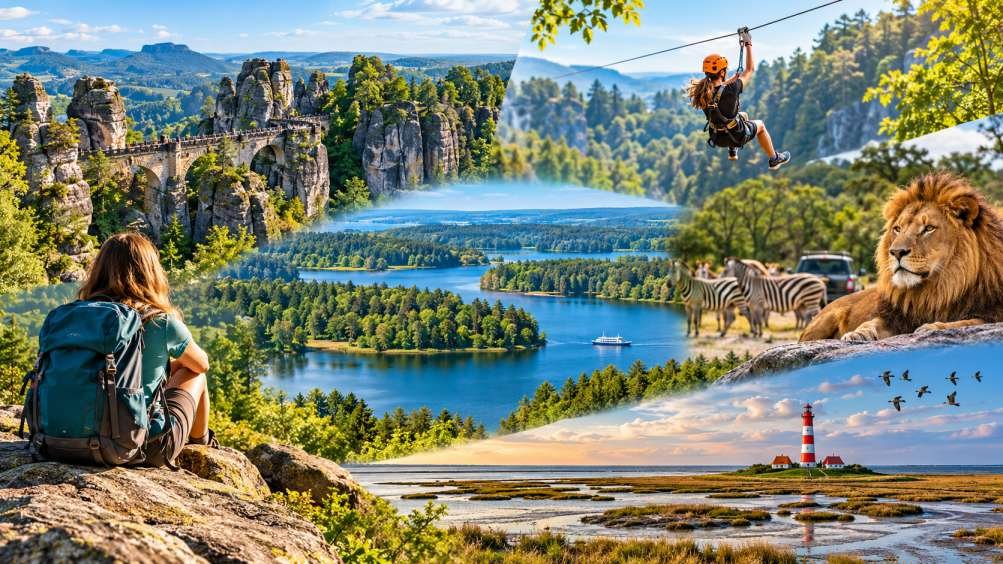
Forests, lakes, mountains, wild animals, and plenty of outdoor activities: you do not have to travel far to enjoy an unforgettable nature holiday in Germany. Discover the natural side of Germany through hiking, wildlife parks, ziplining, and many other outdoor experiences.
Germany has much more to offer nature lovers than you might expect. You can walk through dense forests, watch rare animals, zipline through the treetops, or spend several days hiking with a backpack and tent. There are many ways to enjoy nature close to home.
Nature Holidays in Germany: Best Destinations at a Glance
| Destination | Best for | Activities | Best time to visit |
|---|---|---|---|
| Müritz National Park | Wildlife lovers and people seeking peace | Hiking, cycling, birdwatching, and lakes | Spring to autumn |
| Palatinate Forest | Hikers and adventure lovers | Hiking, trekking, castles, and ziplining | Spring to autumn |
| Teutoburg Forest | Families and active travellers | Hiking, nature activities, and day trips | Spring to autumn |
| Saxon Switzerland | Hikers and climbers | Rock formations, hiking, and climbing | Spring to autumn |
| Wadden Sea | Nature and bird lovers | Mudflat hiking, birdwatching, and coastal trips | Spring to autumn |
| Bavarian Forest | Families and nature lovers | Hiking, wildlife, forests, and viewpoints | All year |
Tip: First, decide what you want to do during your nature holiday. Do you want an active hiking trip, a family adventure, or a quiet break surrounded by nature? Germany offers destinations for all these interests.
Explore Germany’s Wild Side
A nature holiday does not have to mean walking through the forest for hours. If you want more adventure, you can visit a safari park, travel through the treetops on a zipline, or spend several days hiking with a tent and backpack.
Safari Parks in Germany: See Wild Animals Up Close
“If a lion steps out of the bushes in the red morning light and gives a loud roar, the hearts of people will still be filled with excitement fifty years from now.”
Bernhard Grzimek, conservationist and animal behaviour researcher
At Serengeti Park in Hodenhagen, near the southern edge of the Lüneburg Heath, you can see animals such as lions, tigers, rhinos, elephants, and antelopes. Around 2,000 animals live in the park.
The park is known as one of Europe’s largest safari parks. You can also take a quad safari with experienced guides for an extra adventure.
Another option is Safariland Stukenbrock near Bielefeld. It has around 600 animals, including white rhinos, cheetahs, white lions, tigers, and rheas. It also has a covered indoor adventure playground of around 1,000 square metres, with a starry-sky ceiling. Visitors can also enjoy more rides than at Hodenhagen.
Both parks are suitable for families, animal lovers, and anyone who wants an active holiday.
Good to know: Opening hours, ticket prices, and available activities can change. Check the official website of each park before visiting.
Ziplining Through the Treetops
Have you ever imagined moving through the forest from high above the ground? Ziplining lets you travel above the trees while enjoying views of the forest.
In the Vulkaneifel region, you can visit EifelAdventures in the Berlinger Bach Valley. The experience can last around two and a half hours and lets you move through the forest canopy. Some activities may require you to sign a waiver.
The Allgäu region offers another exciting option. AlpspitzKICK is a long zipline that runs about 1.2 kilometres from the mountain station. Riders can reach speeds of up to 120 kilometres per hour.
You can also visit the Zipline Park Elmstein in the Palatinate Forest, about an hour’s drive from Mannheim. After an introduction, visitors can ride across 18 zipline routes at heights of up to 20 metres. The park also offers four jump platforms.
These destinations are suitable for adventure lovers, active travellers, and anyone who wants to combine nature with outdoor activities.
Read More: The Best Nature Holidays in Germany
Nature Holidays in Germany’s Forests
Around 32% of Germany’s land area is covered by forests. The country has many forest regions where visitors can enjoy hiking, wildlife watching, and outdoor adventures.
Have you ever seen a stag beetle with its large antler-like jaws? A walk through Germany’s forests could give you the chance to discover wildlife you may never have seen before.
Palatinate Forest: Hiking, Castles, and Trekking
The Palatinate Forest in Rhineland-Palatinate is one of the largest connected forest areas in Western Europe. Its landscape includes old castle ruins, deep valleys, streams, and many types of birds.
The region offers a chance to explore landscapes that have changed little over time. Trifels Castle and Berwartstein Castle are two places where you can enjoy views of the surrounding countryside.
Autumn is a particularly good time to visit because the forest changes colour as the leaves turn red, orange, and yellow.
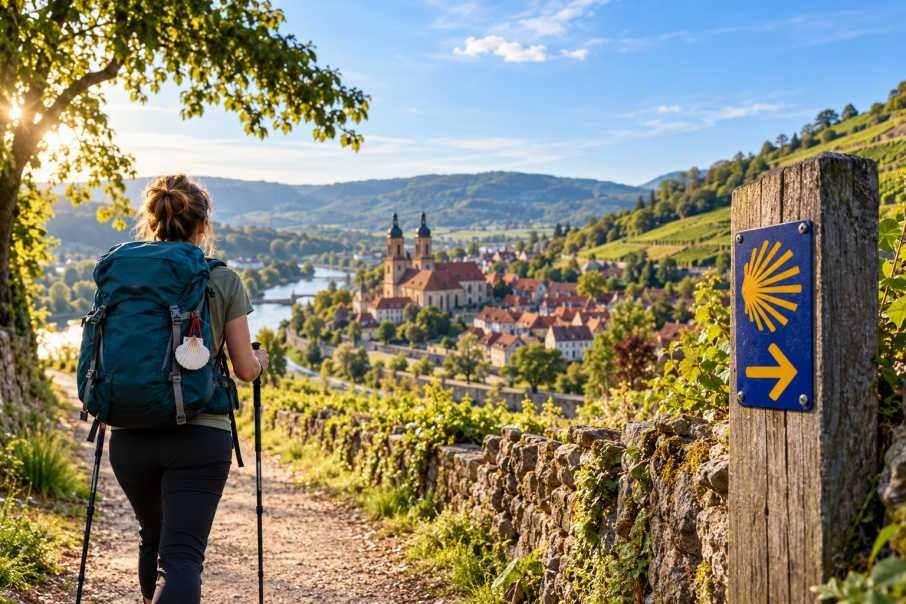
If you want more than a day hike, the Palatinate Forest also has trekking camps where you can stay overnight during multi-day hiking trips.
Tip: Combine a hike with a visit to one of the old castle ruins to enjoy both nature and history.
Teutoburg Forest: Nature and History
The Teutoburg Forest is known for its connection to the ancient battle between Germanic tribes and Roman forces. The battle became an important event in German history.
One of the region’s best-known attractions is the Hermannsdenkmal, a large monument built in honour of Arminius, the Germanic leader associated with the victory. Construction began in 1838 and took 37 years to complete.
The region is also worth visiting for its forests, rock formations, and hiking trails. Even beyond the famous monument, there are many places to explore on foot.
The Teutoburg Forest is suitable for hikers, families, and travellers who want to combine nature with history and culture.
Read More: Top 10 Attractions in Munich, Germany
Müritz National Park: Lakes, Forests, and Wildlife
Müritz National Park is Germany’s largest national park by area and is covered mostly by forests. The region is also home to Lake Müritz, one of Germany’s largest lakes.
The lake and surrounding wetlands provide habitats for white-tailed eagles and ospreys. You can watch birds from observation towers and viewing points along the walking trails.
With some luck, you may even spot a wolf in the forests of Mecklenburg-Western Pomerania.
Water is another important part of the region. Lake Müritz and the many nearby lakes make this area a good destination for cycling, canoeing, and other water activities.
Müritz National Park is especially suitable for nature lovers, wildlife watchers, cyclists, and anyone looking for a quiet break.
Saxon Switzerland: Nature Among the Rocks
If you enjoy dramatic rock formations, Saxon Switzerland is worth visiting. Located south of Dresden, this region is known for its sandstone cliffs, deep valleys, and varied hiking trails.
Two of its best-known attractions are the Bastei rock formation and the Schrammsteine rocks.
The region is popular with hikers and climbers. You can also explore the landscape at a slower pace and enjoy the views along the trails.
Saxon Switzerland is a good choice for hikers, climbing enthusiasts, and active travellers who want to explore Germany’s natural landscapes.
Nature Holidays by the Water: Explore the Wadden Sea
A nature holiday in Germany is not limited to forests and mountains. The coast also offers many opportunities to see wildlife and explore natural landscapes.
The Schleswig-Holstein Wadden Sea is one of Germany’s best regions for birdwatching. In spring and autumn, many migratory birds stop here during their journeys.
A guided mudflat walk allows you to explore this unusual coastal landscape at close range.
Heligoland is another interesting destination for nature lovers. This island in the North Sea is known for its birdlife and distinctive red cliffs.
The Wadden Sea and Heligoland are especially suitable for birdwatchers, families, and travellers who want to combine coastal scenery with nature activities.
Trekking in Germany: Multi-Day Hiking Trips
Trekking is a good choice if you want to spend several days walking through nature. These trips often involve long hiking days and overnight stays away from regular accommodation.
Long-distance hiking trails can help you plan your route and avoid getting lost.
However, wild camping is generally not allowed in Germany. If you want to sleep in a tent during a trekking trip, you should use designated trekking camps where overnight stays are permitted.
Some trekking camps in the Spessart region require advance reservations through Trekking Bayern. Another option is Trekkingcamp Schmidtburg, located near the ruins of an old castle. It can be reached by following the 84.9-kilometre Soonwaldsteig long-distance hiking trail.
The Palatinate Forest also offers 14 trekking camps for hikers who want to spend several nights outdoors.
Trekking in Germany is best suited to experienced hikers, outdoor enthusiasts, and travellers who enjoy multi-day adventures.
Important: Before starting a trekking trip, check the current camping rules, permitted overnight locations, and reservation requirements.
Read More: Best Islands in Germany
Birdwatching in Germany: Discover Local Wildlife
Birdwatching may sound like a quiet activity, but it can take you to some of Germany’s most interesting natural areas.
During summer, many birds sing in the early morning, often before around 10 a.m., and again during the hours before sunset. Some species are more active in the morning, while others are easier to hear in the evening.
Before visiting a destination, check which bird species live there and when they are most active.
A pair of binoculars and a good bird identification guide can help you recognise different species. You can also use a bird identification app such as BirdNET, which analyses bird sounds recorded on your phone.
Best Birdwatching Locations in Germany
The Schleswig-Holstein Wadden Sea is an important stop for migratory birds in spring and autumn. You may see wild geese, ducks, knots, sandpipers, curlews, godwits, plovers, and terns.
Further out in the North Sea, Heligoland is another popular destination for birdwatchers. Its bird cliffs attract people who want to observe seabirds.
In Brandenburg’s Lower Oder Valley National Park, you can look for white-tailed eagles, kingfishers, cranes, and black storks. Around 100,000 waterbirds use the area during spring and autumn migration.
Lake Constance is another good place for birdwatching, with more than 300 bird species recorded in the region.
These destinations offer good opportunities to discover Germany’s birdlife throughout the year.
Which Nature Holiday in Germany Is Right for You?
If you are unsure which destination to choose, use this guide to find an option that matches your interests.
| If you want to… | Consider visiting… | Best for |
|---|---|---|
| Enjoy an adventure | Zipline parks in the Allgäu, Eifel, or Palatinate Forest | Outdoor activities and excitement |
| Go hiking | Palatinate Forest, Teutoburg Forest, or Saxon Switzerland | Active days outdoors |
| Watch wildlife | Müritz National Park, Wadden Sea, or Lower Oder Valley | Wildlife and nature observation |
| Travel with children | Safari parks, treetop walks, and family-friendly nature areas | Family activities |
| Find peace and quiet | Mecklenburg Lake District, Müritz, or quieter nature parks | Relaxation |
| Spend several days outdoors | Trekking regions and long-distance hiking trails | Multi-day adventures |
| Enjoy the sea and nature | Wadden Sea and the North and Baltic Sea coasts | Coastal walks and wildlife |
Nature Holidays in Germany by Season
Germany offers outdoor activities throughout the year, but each season has something different to offer.
Spring
Nature begins to grow again. Forests turn green, flowers bloom, and migratory birds stop in the Wadden Sea. Spring is a good time for walking and birdwatching.
Summer
Summer is a good time for hiking, cycling, water sports, and long days outdoors. Lakes and coastal destinations are especially popular.
Autumn
Autumn is a favourite season for many nature lovers. Forests change colour, and mist often covers lakes and valleys in the morning.
Winter
Even when some outdoor activities slow down, a nature holiday can still be worthwhile. Snow-covered forests, fresh air, and quiet landscapes offer a different way to explore Germany.
How to Travel Sustainably in Nature
If you enjoy nature, it is important to protect it. When visiting national parks and nature reserves, stay on marked trails, avoid disturbing animals, and take your rubbish with you.
You can also reduce the environmental impact of your trip by choosing public transport. Many nature destinations in Germany can be reached by train and bus.
Some destinations also provide local transport options that allow visitors to explore the area without using a private car.
Accommodation for Nature Holidays in Germany
Germany offers many options for travellers who want to spend time outdoors. You can stay near forests and lakes, plan a trekking trip with overnight stays in designated camps, or choose accommodation close to birdwatching areas and hiking trails.
Whether you want to watch birds, try ziplining, spend several days hiking with a backpack, or relax near a lake, Germany has a wide range of options for a nature holiday.
Choose a destination that matches your interests, check the local travel rules, and plan your accommodation before you go.
Frequently Asked Questions
Where can you enjoy the best nature holidays in Germany?
Some popular destinations include the Black Forest, Bavarian Forest, Saxon Switzerland, Palatinate Forest, Müritz National Park, Harz Mountains, and the North and Baltic Sea coasts. Each region offers different landscapes and activities.
Which regions in Germany are best for a family nature holiday?
Families can choose destinations with easy walking trails, wildlife attractions, and activities for children. The Bavarian Forest, Teutoburg Forest, and Lüneburg Heath are examples of regions worth considering.
Where can you go trekking in Germany?
Designated trekking camps can be found in regions such as the Palatinate Forest and Spessart. You can also find overnight trekking options along some long-distance hiking trails. Check local rules and book camps in advance when required.
Can you enjoy a nature holiday in Germany without a car?
Yes. Many nature destinations can be reached by train and bus. Some national parks and nature regions also offer local transport options that make it easier to explore without a private car.
Plan your route in advance and check public transport connections before your trip.